

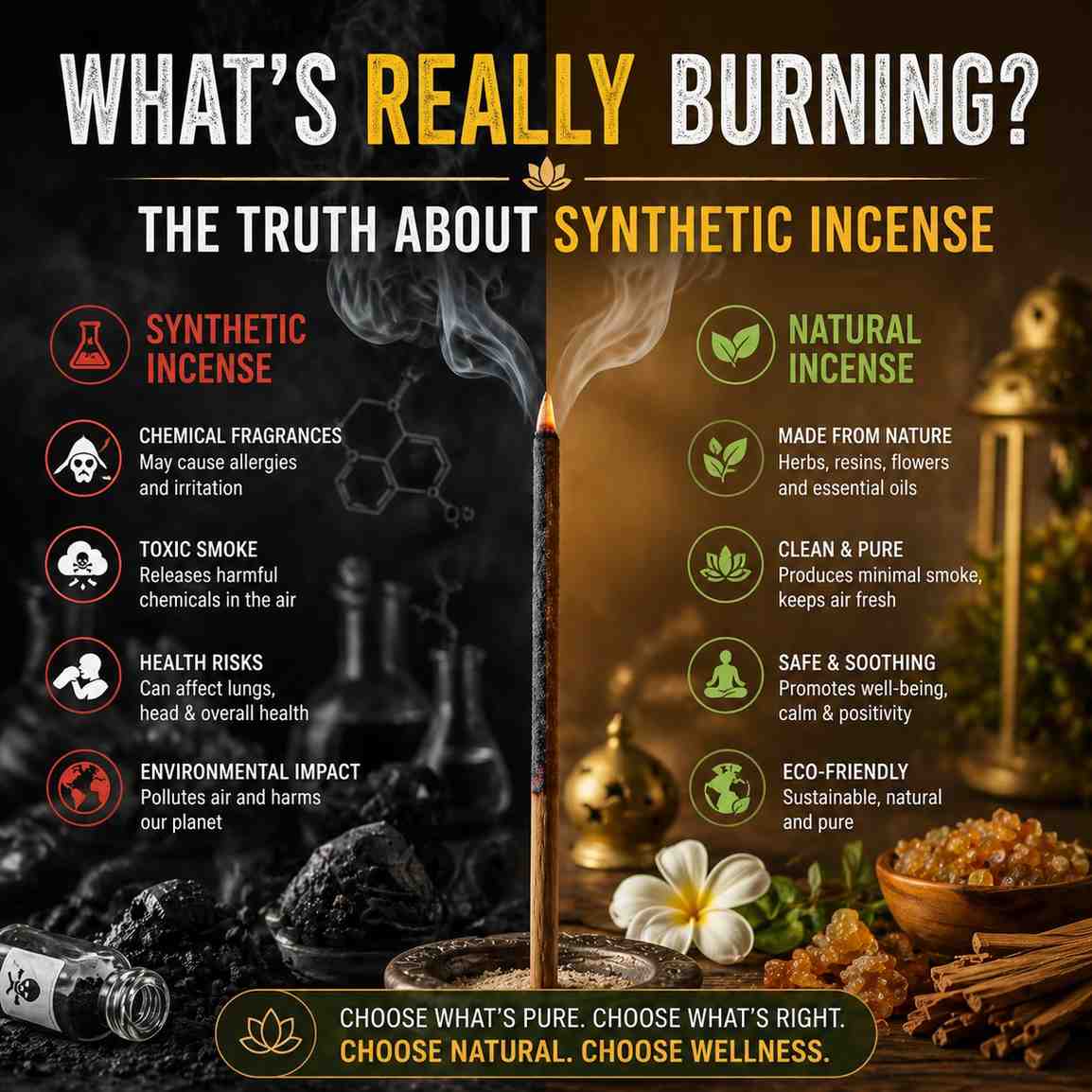
In many Indian homes, lighting incense is more than a ritual—it’s a moment of peace, devotion, and connection. But have you ever stopped to think about what you’re actually burning?
While incense sticks (agarbatti) are meant to purify the environment, not all incense is created equal. The growing popularity of synthetic incense has quietly introduced chemicals and artificial compounds into spaces meant for calm and spirituality.
Let’s uncover the truth behind synthetic incense—and why choosing the right one matters.
What is Synthetic Incense?
Synthetic incense, often known as dipped agarbatti, is made by coating plain bamboo sticks with charcoal powder and synthetic fragrance oils. Instead of natural ingredients, these products rely on:
- Artificial perfumes
- Chemical binders
- Synthetic solvents
They are mass-produced, cost-effective, and widely available—but convenience often comes at a hidden cost.
The Hidden Risks of Synthetic Incense
1. Indoor Air Pollution
Burning synthetic incense can release harmful smoke particles into your home environment.
- Fine particulate matter (PM2.5)
- Carbon monoxide
- Volatile organic compounds (VOCs)
These pollutants can degrade indoor air quality, especially in enclosed spaces.
2. Respiratory Irritation
Regular exposure to synthetic incense smoke may lead to:
- Breathing discomfort
- Coughing or throat irritation
- Aggravation of asthma or allergies
For families with children or elderly members, this becomes even more concerning.
3. Headaches & Mental Fatigue
Strong artificial fragrances may seem pleasant at first but can cause:
- Headaches
- Dizziness
- Mental fatigue
Unlike natural aromas, synthetic scents often overwhelm the senses instead of calming them.
4. Loss of Spiritual Authenticity
Incense has deep roots in Ayurvedic and spiritual traditions, where natural ingredients like resins, herbs, and oils were used to:
- Purify surroundings
- Enhance meditation
- Create positive energy
Synthetic incense lacks this authenticity, turning a sacred ritual into a chemical experience.
5. Environmental Impact
Mass production of synthetic incense contributes to:
- Chemical waste
- Non-biodegradable residue
- Increased environmental pollution
It’s not just about what you breathe—it’s about what we leave behind.
Natural vs Synthetic: The Real Difference
| Aspect | Natural (Masala) Incense | Synthetic (Dipped) Incense |
|---|---|---|
| Ingredients | Herbs, resins, oils | Chemical fragrances |
| Aroma | Subtle, calming | Strong, artificial |
| Health Impact | Safer, soothing | Potential irritation |
| Experience | Traditional & spiritual | Commercial & intense |
The Melloow Luxury Difference
At Melloow Luxury, we believe incense should be an experience of purity, not compromise.
Our incense products are crafted using:
- Natural ingredients
- Traditional blending techniques
- Premium fragrance profiles
We focus on creating luxury incense that respects both tradition and well-being, ensuring that every stick you light enhances your space—not harms it.
Make the Conscious Choice
Your puja room is a place of peace, positivity, and connection. What you burn there matters.
Choosing natural incense over synthetic alternatives is not just a preference—it’s a lifestyle decision that impacts:
- Your health
- Your environment
- Your spiritual experience
Final Thoughts
The next time you light an incense stick, ask yourself:
s this truly purifying my space—or polluting it?
With Melloow Luxury, you don’t have to choose between fragrance and well-being. You get both—crafted with care, rooted in tradition, and elevated for modern living.