

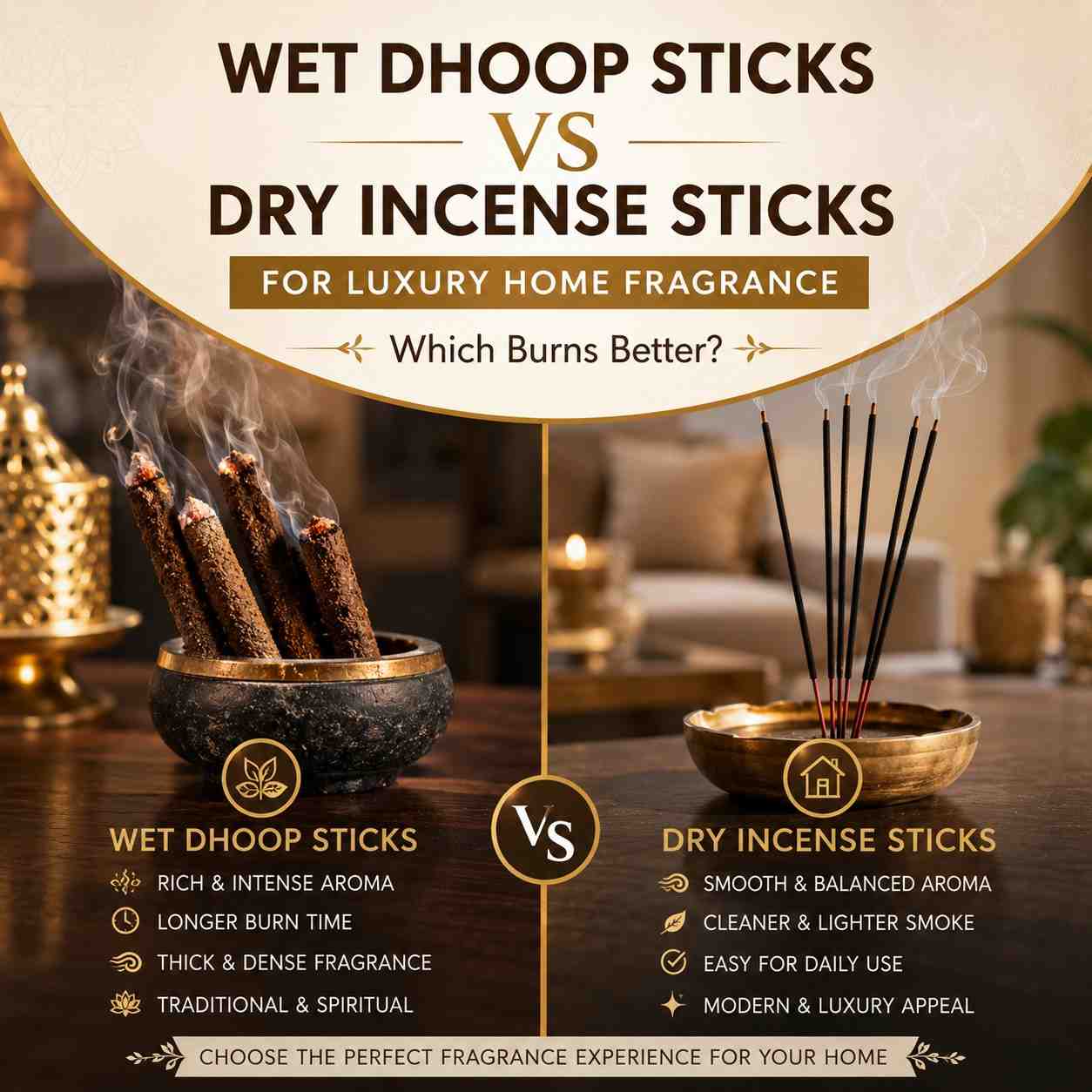
Incense has been an essential part of Indian culture for centuries, deeply connected with spirituality, relaxation, meditation, and home fragrance rituals. Today, as the global fragrance industry continues evolving, consumers are becoming more curious about the different types of incense products available in the market.
Among the most commonly compared products are wet dhoop sticks and dry agarbatti.
While both are used to create aromatic environments, they differ significantly in:
- Composition
- Burning style
- Fragrance intensity
- Smoke density
- Longevity
- User experience
Many consumers often ask: Which burns better — wet dhoop sticks or dry agarbatti?
The answer depends on what kind of fragrance experience you are looking for.
This detailed guide explores the differences between wet dhoop sticks and dry agarbatti, how they burn, and which one is better suited for different lifestyles and preferences.
Understanding Wet Dhoop Sticks
Wet dhoop sticks are thicker incense products made using a paste-like blend of aromatic ingredients, herbs, wood powders, essential oils, resins, and natural binding agents.
Unlike traditional agarbatti, wet dhoop generally:
- Contains higher fragrance concentration
- Produces denser smoke
- Burns slower
- Creates a stronger aroma throw
Wet dhoop sticks are often associated with:
- Temple rituals
- Spiritual ceremonies
- Meditation spaces
- Traditional Indian fragrance experiences
Their rich aroma profile makes them especially popular among people who enjoy deep, intense fragrances.
Understanding Dry Agarbatti
Dry agarbatti, also known as traditional incense sticks, is typically made by coating bamboo sticks with aromatic powder blends and fragrance oils.
Dry agarbatti is known for:
- Lighter smoke
- Faster ignition
- Controlled burning
- Wide fragrance variety
- Easy daily use
These incense sticks are commonly used in:
- Homes
- Offices
- Yoga studios
- Wellness spaces
- Relaxation rituals
Modern luxury incense brands have elevated dry agarbatti by introducing sophisticated fragrance blends inspired by:
- Oud
- Sandalwood
- Floral notes
- Woody aromas
- Oriental perfumes
The Core Difference Between Wet Dhoop and Dry Agarbatti
The biggest difference lies in moisture content and fragrance density.
Wet Dhoop
- Higher oil and moisture concentration
- Dense aromatic composition
- Slower burn
- Thicker smoke output
Dry Agarbatti
- Dry powder-coated structure
- Balanced fragrance diffusion
- Cleaner smoke
- Faster and smoother burn
This structural difference directly affects how each product burns.
Which Burns Better?
The answer depends on how you define “better.”
Let’s compare them across multiple factors.
1. Burning Duration
Wet Dhoop Sticks
Wet dhoop generally burns slower because of its dense composition and higher moisture content.
Benefits:
- Longer fragrance experience
- Better for extended rituals
- Suitable for meditation sessions
Drawbacks:
- Sometimes harder to ignite
- May extinguish if airflow is poor
Dry Agarbatti
Dry agarbatti burns more consistently and lights quickly.
Benefits:
- Easy everyday usage
- Stable flame and burn
- Convenient for short fragrance sessions
Drawbacks:
- Shorter burn duration compared to wet dhoop
Winner:
Wet dhoop wins for longer burning time.
2. Fragrance Intensity
Wet Dhoop
Wet dhoop typically produces a richer and more concentrated aroma.
The fragrance often feels:
- Deep
- Earthy
- Traditional
- Powerful
- Immersive
This makes wet dhoop ideal for:
- Spiritual ambience
- Large spaces
- Temple-like environments
Dry Agarbatti
Dry agarbatti creates a more balanced and lighter fragrance experience.
Luxury dry incense often feels:
- Elegant
- Smooth
- Refined
- Contemporary
This makes it ideal for:
- Bedrooms
- Living rooms
- Offices
- Modern interiors
Winner:
- For intense aroma → Wet dhoop
- For subtle luxury ambience → Dry agarbatti
3. Smoke Production
Wet Dhoop
Wet dhoop generally creates thicker smoke because of its oil-rich formulation.
This can:
- Enhance spiritual atmosphere
- Create dramatic fragrance diffusion
However, excessive smoke may feel overwhelming in smaller rooms.
Dry Agarbatti
Dry agarbatti usually produces lighter smoke and cleaner burning.
This makes it:
- More suitable for daily use
- Comfortable for indoor environments
- Preferred in modern homes
Winner:
Dry agarbatti for cleaner and lighter burning.
4. Ease of Use
Wet Dhoop
Wet dhoop may require:
- Careful lighting
- Stable holders
- Proper airflow
Its softer structure can sometimes be more delicate.
Dry Agarbatti
Dry incense sticks are easier to:
- Light
- Store
- Carry
- Use daily
They are highly convenient for regular fragrance routines.
Winner:
Dry agarbatti for convenience.
5. Fragrance Longevity in the Room
Wet Dhoop
Because of stronger aromatic oils, wet dhoop fragrances often linger longer in the environment.
Dry Agarbatti
Dry agarbatti offers a more moderate lingering effect, depending on fragrance quality.
Premium handcrafted incense can still provide excellent room retention.
Winner:
Wet dhoop for stronger fragrance persistence.
6. Aesthetic & Lifestyle Appeal
Modern consumers increasingly care about how fragrance products fit into their lifestyle and interiors.
Wet Dhoop
Wet dhoop is often associated with:
- Traditional rituals
- Spiritual ceremonies
- Cultural ambience
Dry Agarbatti
Luxury dry agarbatti is commonly linked with:
- Modern wellness
- Luxury décor
- Minimalist living
- Sophisticated home fragrance culture
Winner:
Depends entirely on personal preference and lifestyle.
Why Luxury Consumers Prefer Premium Dry Agarbatti
While wet dhoop remains highly respected in traditional settings, modern luxury consumers increasingly prefer premium dry incense because it offers:
- Cleaner burning
- Elegant aroma diffusion
- Stylish packaging
- Contemporary fragrance profiles
- Better suitability for modern interiors
Brands like Melloow Luxury are helping redefine dry agarbatti by combining:
- Handcrafted quality
- Rich fragrance blends
- Premium presentation
- Luxury ambience experiences
This modern approach transforms incense from a traditional product into a sophisticated lifestyle accessory.
Which Is Better for Meditation?
Both products work well for meditation, but their effects differ.
Wet Dhoop
Ideal for:
- Deep spiritual sessions
- Traditional meditation environments
- Temple-inspired ambience
Dry Agarbatti
Ideal for:
- Calm mindfulness practices
- Modern yoga spaces
- Relaxation routines
- Daily wellness rituals
Environmental & Air Quality Considerations
Consumers today are increasingly aware of air quality and sustainable living.
Premium handcrafted incense products generally focus on:
- Better ingredient quality
- Cleaner burning
- Natural aromatic oils
- Reduced harsh chemicals
Choosing high-quality incense matters more than simply choosing between wet or dry formats.
The Future of Incense Consumption
The incense industry is rapidly evolving beyond traditional use.
Consumers now purchase incense for:
- Home fragrance
- Emotional wellness
- Luxury ambience
- Interior styling
- Relaxation rituals
As a result:
- Wet dhoop continues thriving in spiritual and traditional segments
- Dry agarbatti dominates modern luxury and lifestyle markets
Both categories are growing, but for different reasons.
Final Verdict: Which Burns Better?
There is no single universal winner because both products serve different purposes.
Choose Wet Dhoop If You Want:
- Stronger fragrance
- Longer-lasting aroma
- Traditional ambience
- Rich smoke output
- Spiritual experience
Choose Dry Agarbatti If You Want:
- Cleaner burning
- Elegant fragrance
- Daily usability
- Luxury home ambience
- Modern lifestyle appeal
Ultimately, the best choice depends on your personal fragrance preferences, lifestyle, and the type of atmosphere you want to create.
As fragrance culture continues evolving globally, both wet dhoop sticks and premium dry agarbatti will remain important parts of aromatic living experiences.