

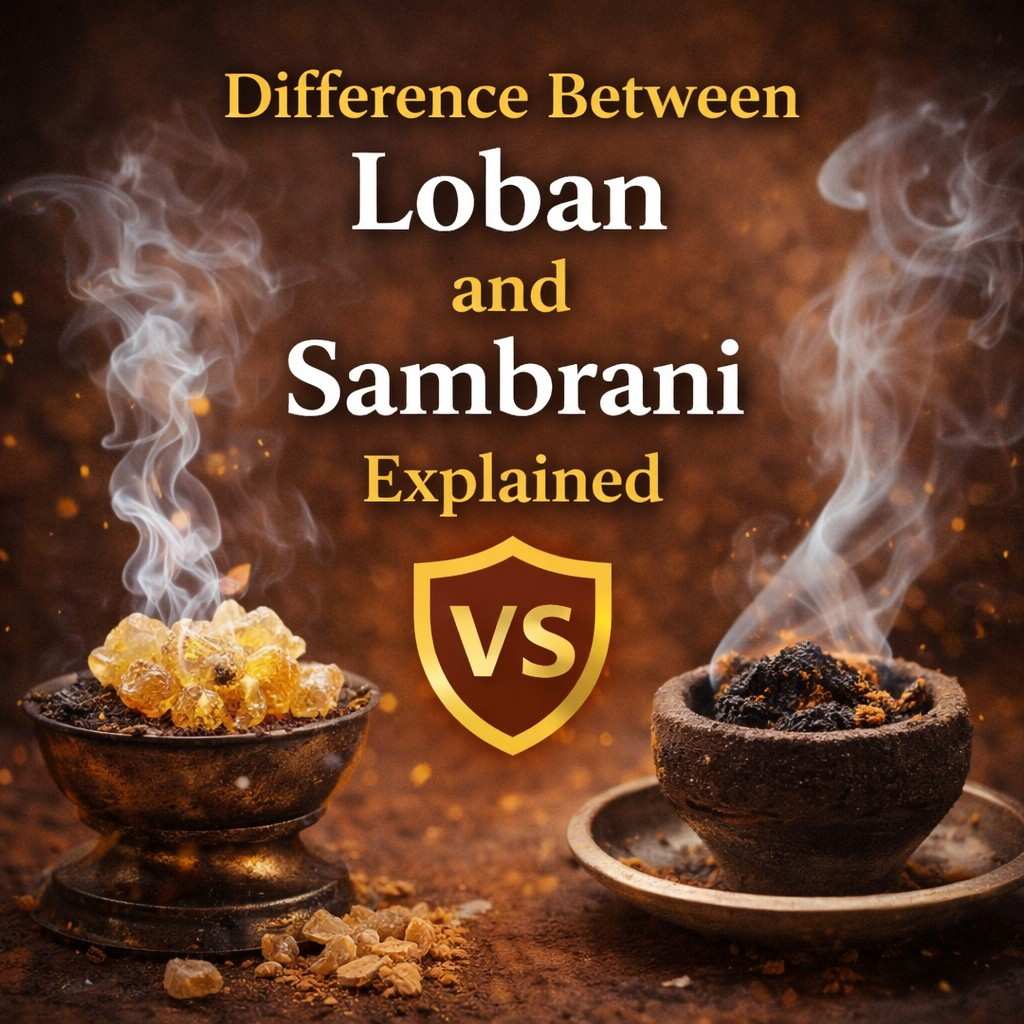
In Indian households, temples, and spiritual spaces, Loban and Sambrani are widely used for purification and divine fragrance. While many people assume they are the same, there are clear differences in origin, aroma, usage, and benefits.
If you’re confused about which one to use for your home, pooja, or meditation, this guide will help you choose the right one.
What is Loban?
Loban is a natural aromatic resin obtained from tree bark (commonly from the Styrax tree family). It is usually available in crystal or powder form and is burned on charcoal.
Fragrance Profile:
- Warm
- Balsamic
- Slightly sweet
- Resinous and traditional
Common Uses:
- Daily pooja rituals
- Home purification
- Removing negative energy
- Spiritual ceremonies
When burned, loban produces thick smoke with a strong traditional temple-like aroma that instantly creates a sacred atmosphere.
What is Sambrani?
Sambrani is also a natural resin but is commonly associated with benzoin resin and is often blended with herbs, wood powders, and essential oils. In South India especially, sambrani cups are very popular.
Fragrance Profile:
- Deep
- Rich
- Slightly woody
- More refined and soothing
Common Uses:
- Post-pooja rituals
- Hair fumigation (traditional practice)
- Meditation and relaxation
- Festive rituals
Sambrani usually gives a smoother and more calming fragrance compared to the sharper intensity of loban.
Key Differences Between Loban and Sambrani
| Feature | Loban | Sambrani |
|---|---|---|
| Origin | Tree resin (Styrax family) | Benzoin resin (often blended) |
| Smoke Level | Heavy smoke | Moderate smoke |
| Aroma Strength | Strong & sharp | Smooth & deep |
| Usage Style | Burned on charcoal | Cups or charcoal |
| Best For | Energy cleansing | Relaxation & devotion |
Which One Should You Choose?
✔ Choose Loban if you want:
- Strong purification effect
- Traditional temple-like fragrance
- Deep space cleansing
✔ Choose Sambrani if you want:
- Softer and calming aroma
- A relaxing spiritual environment
- Easy-to-use cup format
Can You Use Both Together?
Yes. Many households alternate between loban and sambrani depending on the occasion. For example:
- Loban in the morning for cleansing
- Sambrani in the evening for calming ambience
This combination creates both energetic purity and emotional peace.
Final Thoughts
Both loban and sambrani hold an important place in Indian spiritual traditions. The difference mainly lies in fragrance intensity, smoke density, and intended use.
If your goal is strong purification, go for loban.
If you prefer a soothing spiritual atmosphere, sambrani is the better choice.