

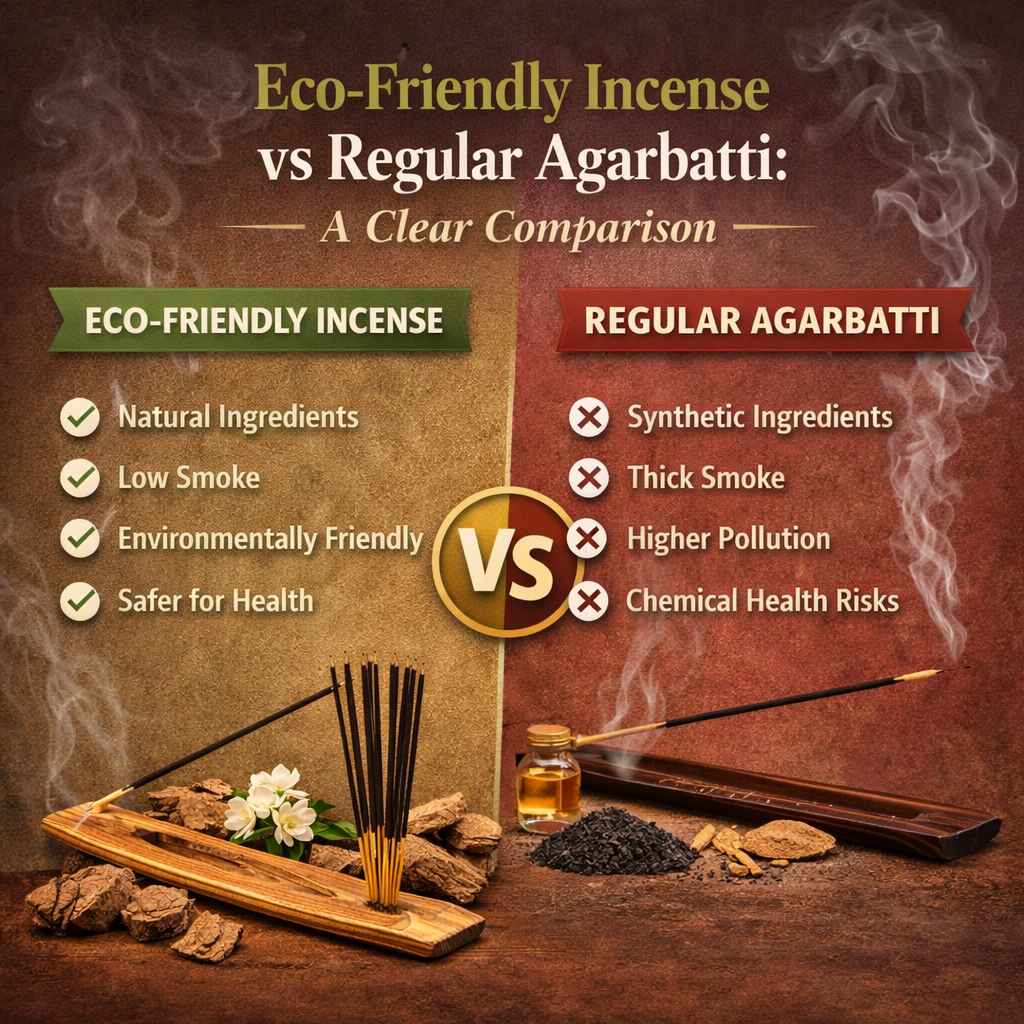
Incense sticks, commonly known as agarbatti, have been an integral part of Indian culture for centuries. Used daily in homes, temples, and spiritual spaces, they symbolize purity, devotion, and positivity. However, with growing awareness about health and environmental impact, many people are now comparing eco-friendly incense sticks with regular agarbatti to make more conscious choices.
While both serve the same purpose of fragrance and ritual, the difference lies in ingredients, manufacturing process, health impact, and sustainability. Understanding these differences can help you choose what is best for your home and lifestyle.
What Are Regular Agarbatti?
Regular agarbatti are traditionally mass-produced incense sticks made to be affordable and long-lasting. While they may smell pleasant, they often rely on synthetic fragrances, chemical binders, and artificial colors to keep costs low and aroma strong.
Common Characteristics of Regular Agarbatti:
- Use of chemical fragrances
- Synthetic binders and fillers
- Strong smoke output
- Artificial coloring
- Low production cost
These incense sticks are widely available and commonly used, but they may have certain drawbacks when used daily or in enclosed spaces.
What Are Eco-Friendly Incense Sticks?
Eco-friendly incense sticks are made using natural, biodegradable, and sustainable ingredients. They focus on minimizing harm to both health and the environment while delivering a mild, pleasant aroma.
Common Characteristics of Eco-Friendly Incense Sticks:
- Natural herbs, resins, and essential oils
- Bamboo or recycled stick bases
- Low-smoke or smokeless burning
- No toxic chemicals or artificial colors
- Environmentally responsible manufacturing
These incense sticks are designed for people who value sustainability, wellness, and mindful living.
Key Differences Between Eco-Friendly Incense Sticks and Regular Agarbatti
1. Ingredients Used
Regular Agarbatti:
Often contain synthetic perfumes, charcoal powder, and chemical adhesives. These ingredients are chosen for cost efficiency and fragrance strength.
Eco-Friendly Incense Sticks:
Made from natural ingredients such as herbs, flower extracts, essential oils, natural resins, and plant-based binders.
✅ Difference: Natural vs chemical composition.
2. Smoke & Air Quality
Regular Agarbatti:
Produces thicker smoke, which may cause irritation or discomfort for sensitive individuals, especially in closed rooms.
Eco-Friendly Incense Sticks:
Designed to burn cleanly with minimal smoke, making them safer for daily use and better for indoor air quality.
✅ Difference: Heavy smoke vs low-smoke burning.
3. Health Impact
Regular Agarbatti:
Long-term exposure to chemical-based incense may contribute to headaches, allergies, or respiratory discomfort in some individuals.
Eco-Friendly Incense Sticks:
Free from harmful chemicals, making them a safer choice for families, elderly people, and those practicing yoga or meditation.
✅ Difference: Potential irritation vs wellness-focused use.
4. Environmental Impact
Regular Agarbatti:
Often use non-biodegradable materials and chemical waste, which can contribute to environmental pollution.
Eco-Friendly Incense Sticks:
Use biodegradable ingredients and sustainable packaging, reducing waste and environmental harm.
✅ Difference: Higher environmental footprint vs sustainable production.
5. Fragrance Experience
Regular Agarbatti:
Strong, sometimes overpowering fragrance designed to last longer but may feel artificial.
Eco-Friendly Incense Sticks:
Soft, natural, and balanced aroma that feels calming rather than overwhelming.
✅ Difference: Artificial intensity vs natural subtlety.
6. Manufacturing Process
Regular Agarbatti:
Mass-produced using machines with limited quality control over individual batches.
Eco-Friendly Incense Sticks:
Often handcrafted or produced in small batches with attention to quality, ingredient sourcing, and consistency.
✅ Difference: Mass production vs mindful manufacturing.
7. Cost & Accessibility
Regular Agarbatti:
Lower cost and widely available, making them a popular everyday option.
Eco-Friendly Incense Sticks:
Slightly higher in price due to quality ingredients and sustainable processes, but offer better long-term value.
✅ Difference: Low-cost convenience vs value-based pricing.
Which One Should You Choose?
The choice between eco-friendly incense sticks and regular agarbatti depends on your usage habits and priorities.
- If you use incense occasionally and prioritize low cost, regular agarbatti may suit your needs.
- If you burn incense daily, practice meditation or yoga, or care about sustainability and indoor air quality, eco-friendly incense sticks are a better choice.
Many people today are switching to eco-friendly options as part of a broader move toward conscious living and sustainable rituals.
Explore Melloow Luxury Incense Collection
Final Thoughts
Both eco-friendly incense sticks and regular agarbatti serve the same traditional purpose, but their impact differs significantly. Eco-friendly incense sticks offer a cleaner, safer, and more environmentally responsible alternative, while regular agarbatti focus on affordability and availability.