

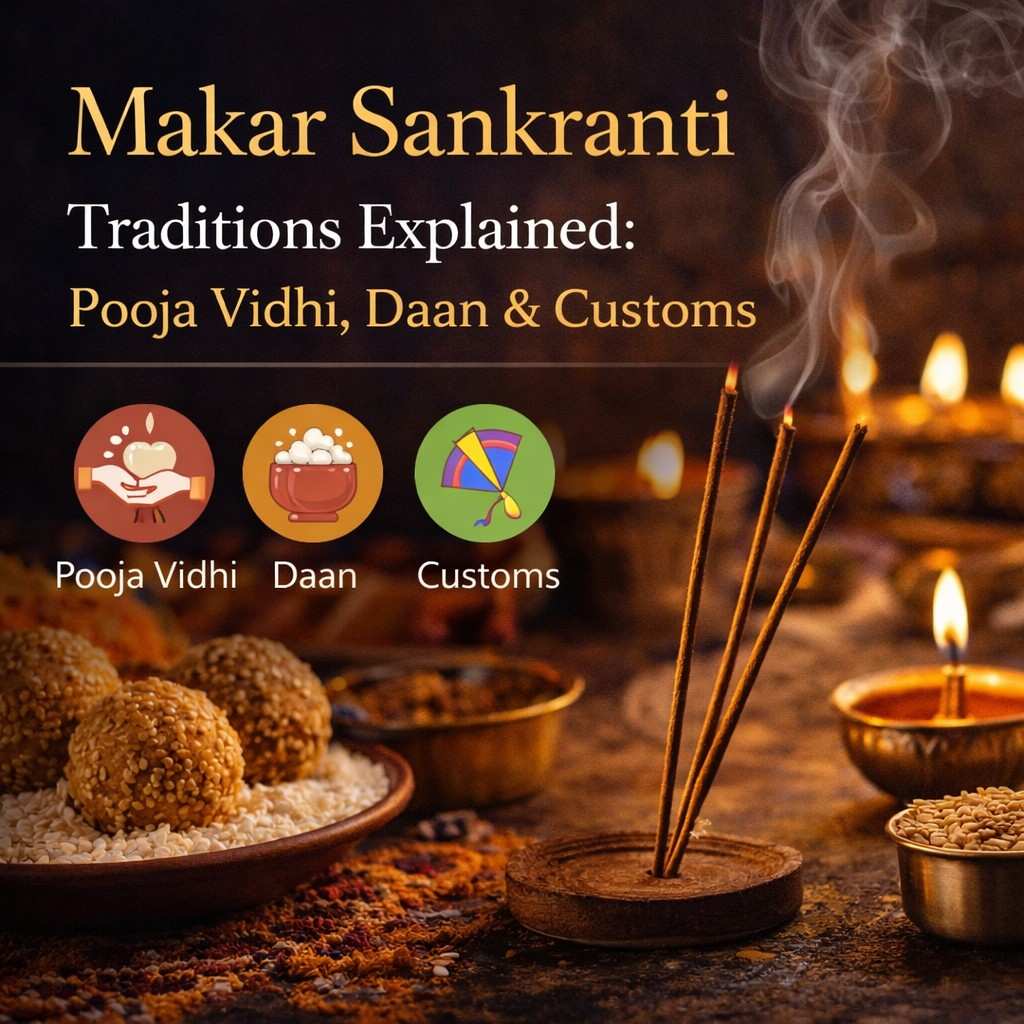
Makar Sankranti is one of the most auspicious festivals in Hindu culture, celebrated across India with great devotion and joy. Unlike most Hindu festivals that follow the lunar calendar, Makar Sankranti is based on the solar calendar and marks the day when the Sun enters the zodiac sign of Capricorn (Makara). This transition signifies the beginning of Uttarayan, an auspicious phase associated with growth, prosperity, and spiritual upliftment.
From sacred pooja rituals and holy donations (daan) to regional traditions and festive foods, Makar Sankranti beautifully blends spirituality with culture.
Why Makar Sankranti Is Considered Auspicious
Makar Sankranti symbolizes the victory of light over darkness and knowledge over ignorance. It marks the end of the harsh winter season and the beginning of longer, warmer days. Spiritually, this period is believed to be ideal for meditation, charity, and positive actions.
According to Hindu beliefs, taking holy baths, performing pooja, and offering daan on this day bring peace, prosperity, and good karma.
Makar Sankranti Pooja Vidhi (Step-by-Step)
Performing pooja on Makar Sankranti is simple yet deeply meaningful. Here’s a traditional pooja vidhi followed in many Indian households:
1. Early Morning Holy Bath
Begin the day by taking a bath, preferably in a river or with water mixed with sesame seeds (til). This is believed to purify the body and soul.
2. Cleaning & Decoration
Clean the pooja area and decorate it with rangoli, flowers, and diyas to invite positive energy.
3. Worship of Sun God (Surya Dev)
Offer water (Arghya) to the rising sun using a copper vessel while chanting Surya mantras. Surya Dev is the primary deity worshipped on Makar Sankranti.
4. Lighting Incense & Diya
Lighting incense sticks during pooja helps purify the surroundings and creates a calm, divine atmosphere. Many families prefer natural, low-smoke incense sticks, like those crafted by Melloow Luxury, to enhance focus during prayers and maintain a pure environment.
5. Offerings (Naivedya)
Offer til-gur (sesame and jaggery), khichdi, sweets, fruits, and flowers to the deity.
6. Aarti & Prayers
Conclude the pooja by performing aarti and seeking blessings for health, prosperity, and happiness.
Importance of Daan (Charity) on Makar Sankranti
Charity holds special significance on this day. It is believed that donations made on Makar Sankranti bring eternal blessings.
Common Items Donated:
- Sesame seeds (Til)
- Jaggery (Gur)
- Warm clothes & blankets
- Food grains and khichdi
- Ghee, sugar, and incense sticks
Donating spiritual essentials like incense sticks is also considered auspicious, as they are used daily in prayers. Gifting quality incense from brands like Melloow Luxury supports both devotion and mindful living.
Traditional Customs & Celebrations Across India
Makar Sankranti is celebrated under different names and traditions across states:
- Uttarayan (Gujarat): Famous for kite flying and community celebrations
- Pongal (Tamil Nadu): A four-day harvest festival dedicated to nature and farmers
- Lohri (Punjab): Celebrated with bonfires, songs, and dance
- Magh Bihu (Assam): Marks the harvest season with feasts
- Khichdi Festival (UP & Bihar): Offering khichdi and donations
Despite regional differences, the core values of gratitude, sharing, and spirituality remain the same.
Spiritual Role of Incense in Makar Sankranti Rituals
Incense sticks play an important role during Makar Sankranti pooja and meditation. The soothing aroma helps calm the mind, enhances concentration, and creates a sacred environment for prayers.
Using low-smoke, long-lasting incense made from natural ingredients ensures a clean and peaceful pooja experience. This is why many households prefer premium incense options like Melloow Luxury, which align with traditional rituals while offering modern quality standards.
Conclusion
Makar Sankranti is more than just a festival—it is a celebration of positivity, gratitude, and new beginnings. Through sacred pooja rituals, meaningful daan, and age-old traditions, this festival encourages us to live with mindfulness and compassion.
By embracing purity in rituals—whether through heartfelt prayers, charity, or the use of quality incense—you can make your Makar Sankranti celebrations truly divine and fulfilling.